gentile bizzotto

OUR
ESTATE
A LOVE STORY
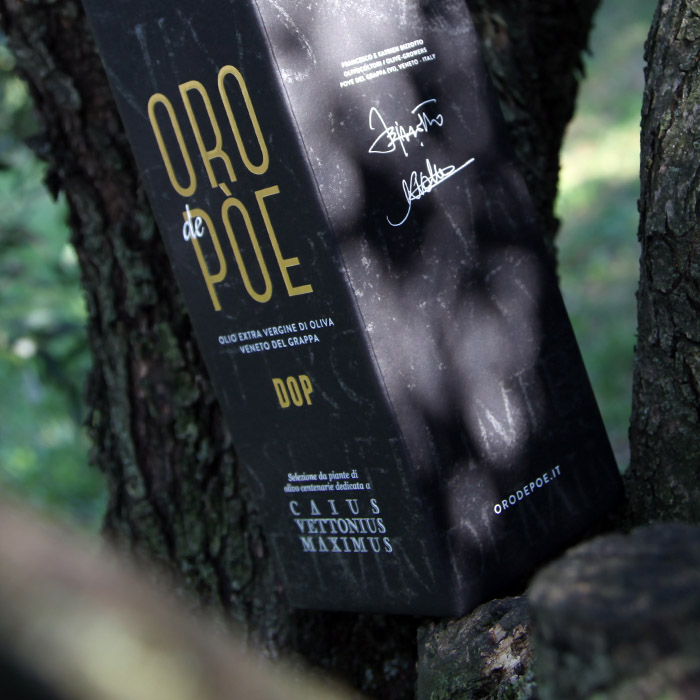
Oro de Pòe olive oil is born out of a true love story. The estate upon which it is created is just as rich in family history and heritage as the land upon which it sits. In the early 1960’s, Cavalier Gentile Bizzotto and his wife Mrs. Elisa, chose to relocate his textile factory to Pove del Grappa, a village in the Vicenza province that was known for its mild microclimate. They chose this particular piece of land because it included an olive orchard with century old olive trees, some dating back more than 300 years. When the Bizzotto family took possession of the land, they immediately planted 200 more trees in honour of their eldest son Paolo, and newly born son Francesco. They felt it was a good omen and a symbolic gift to dedicate trees to their children that were known for their longevity.

Today the Estate Gentile covers 3 hectares, and is divided into 3 olive yards- Gentile, named after the founder; Masiera, named after the antique dry walls (which are built with stones from the nearby river Brenta) that surround the estate; and Sant’Antonio. The last one derives its name from a small chapel located on the grounds, which is dedicated to the saint of Padova. This chapel was built by a local farmer with his bare hands to thank the saint for a safe journey back home after being severely wounded as a soldier during the Second World War. Oro de Pòe is not only a delicious oil but also a powerful concentration of family, tradition, parental love, and gratitude.


THE CULTIVATION
RESPECT OF THE PLANTS
In our olive oil cultivation we respect the plants both in their morphology and their physiology. We prune our trees to facilitate a “full crown arrangement” in order to stimulate the alternation of branch production which is an important characteristic of olive trees. The fertilizers used are organic based and strictly comply with the national P.A.N. specifications for integrated pest control against olive tree diseases along with the use of biological traps to monitor the insects present in the olive grove. The olive grove is completely covered with grass and the composition of the stable lawn is rich in aromatic essences whose scents are then found in the fruitiness / herbaceousness that characterizes our oil.
THE HARVEST
THE MANUAL PROCESSING
At the beginning of September we begin to check the ripeness index of the olives according to the different varieties of plants present in our olive grove. Based on these analyzes, the date and areas of the olive grove in which to start harvesting are decided (generally in the second ten days of October). We harvest by hand and with the help of manual facilitators, always respecting the plants and their fruits. The olives therefore remain intact and healthy and are brought to the mill on the same day with the aim of bringing the moment of harvesting as close as possible to the moment of pressing: the effort is to ensure the preservation of the peculiarities of the olives.


EXPERT
Over the years, I have attended several training courses, ranging from olive grove management to olive oil tasting, and have earned certification as a qualified olive oil tasting technician. It has been an exciting journey of continuous learning and growth. For this, I also owe my thanks to my friend and agronomist Stefano Farronato, who has been the project's technical advisor and a source of inspiration for Oro de Pòe in recent years.

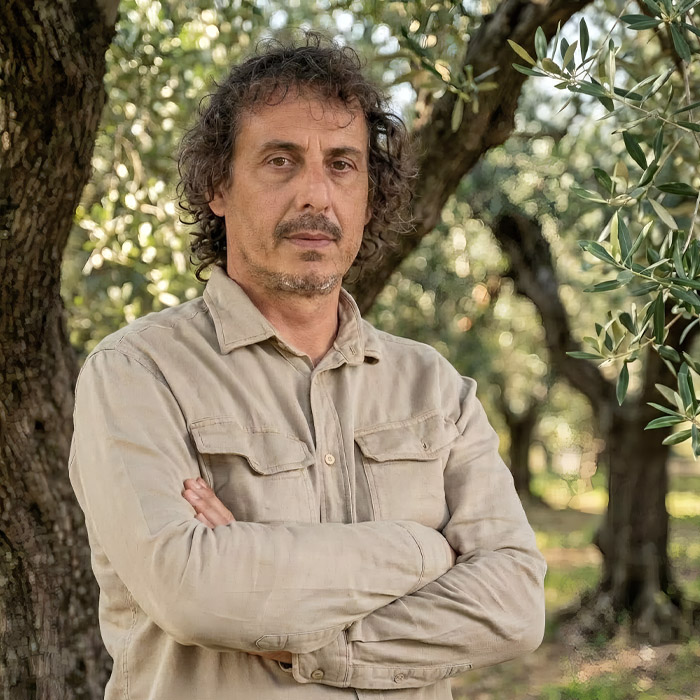
OUR
AGRONOMIST
MARCO PENITENTI
My name is Marco Penitenti, and I am an agronomist. I have been working in olive growing and viticulture for over twenty years. My passion for the land and plants has been with me since childhood and led me to graduate in Agronomy, with a thesis on the olive fruit fly. From there, I began my career as an independent professional, working alongside farms and producers. Over the years, I have managed numerous olive groves along the Brescia shore of Lake Garda, overseeing everything from new plantings and agronomic management to plant protection and harvest quality. In 2011, I founded Videlle Bionatura in Puegnago del Garda. There, the experience I had gained in the field evolved into an agricultural project dedicated to restoring abandoned olive groves, practising organic farming and promoting local olive varieties.
Since 2026, I have been working with Francesco and Katrien on the Oro de Pòe project. I provide agronomic expertise in managing the olive grove and support the family in their pursuit of the highest quality, from olives to olive oil. This is a different environment from the Lake Garda area, with its own exposures, characteristics and olive varieties. It is a place that calls for knowledge, careful observation and respect for its unique identity. Today, I am an agronomist, olive grower, entrepreneur and educator. I believe in an approach to agriculture that brings together knowledge, experience and innovation, respects the land and understands its changing conditions. Because exceptional olive oil begins, above all, with understanding every single tree: recognising its needs and nurturing it, season after season, to produce its finest fruit.
Those trees have grown alongside Amedeo, Maria Elisa and Pierpaolo. Today, our children are becoming increasingly involved, sharing in the work, the decisions and, above all, the desire to protect and preserve what we have inherited. For us, Oro de Pòe is also about passing the torch from one generation to the next. From Gentile and Elisa to us, and now from us to our children. Different generations connected by the same land and a shared commitment to preserving a tradition so that it may continue to grow, just like our olive trees.